What is a spinal deformity?
A healthy spine has gentle natural curves — inward at the neck and lower back, outward at the upper back — and looks like a straight pillar when viewed from the front. A spinal deformity is when these curves vary by more than 10 degrees from a healthy curvature: they become too large, too flat, or the spine bends sideways.
Mild deformities may cause no trouble. More severe ones can cause pain, visible imbalance and difficulty standing or walking — and in some cases, breathing difficulty.
The spine tips forward or backward when viewed from the side — as in kyphosis, excessive lordosis or flatback.
The spine tilts away from the midline when viewed from the back — this is scoliosis.
What are the symptoms of a spinal deformity?
Spinal deformities range from mild to severe, but pain tends to be the trait they share. See a spine surgeon if you notice:
- Uneven shoulders, waist or hips
- A visible hump on the back when bending forward
- The body leaning forward or to one side
- Back pain that keeps getting worse
- A curve that is increasing on repeat X-rays
- Breathlessness, numbness or leg weakness
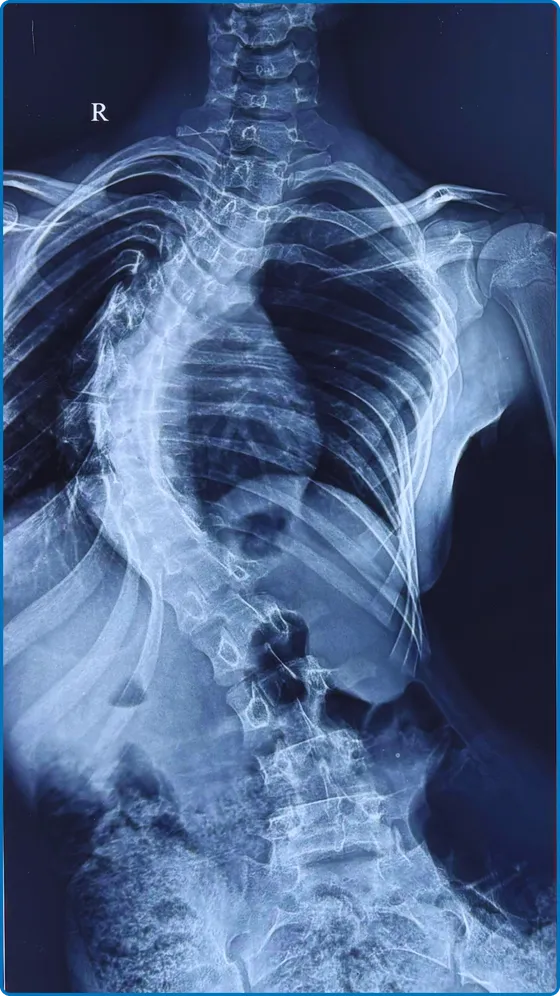
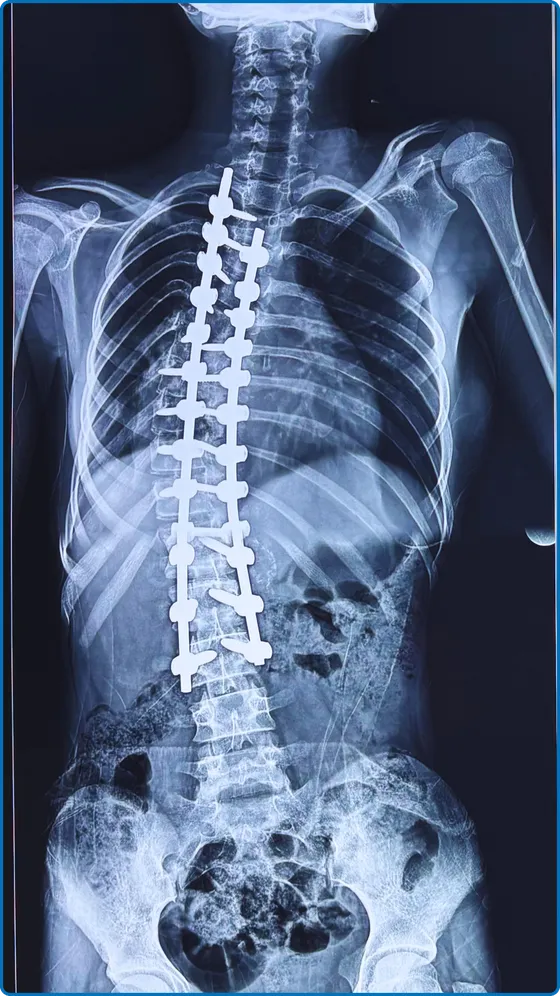
Real corrections at CISRO
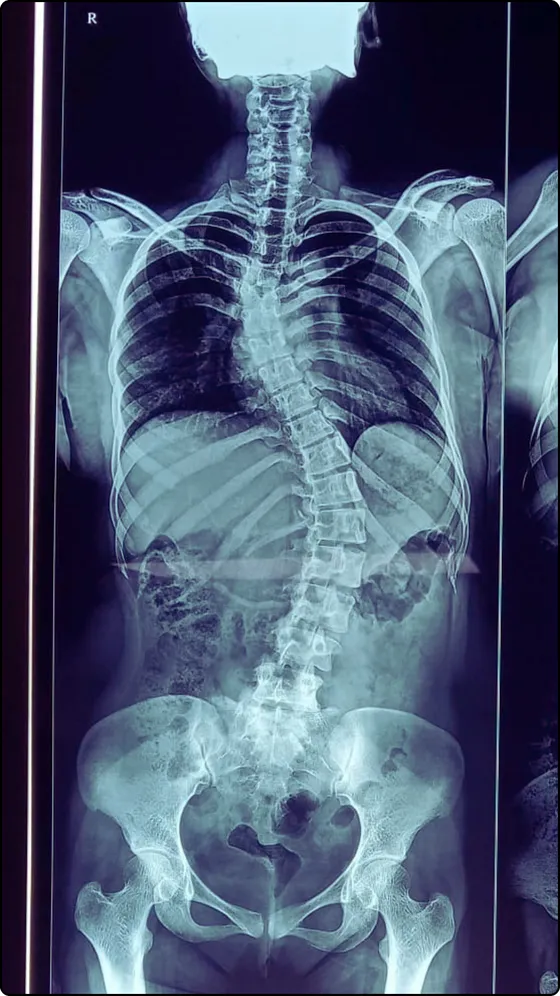
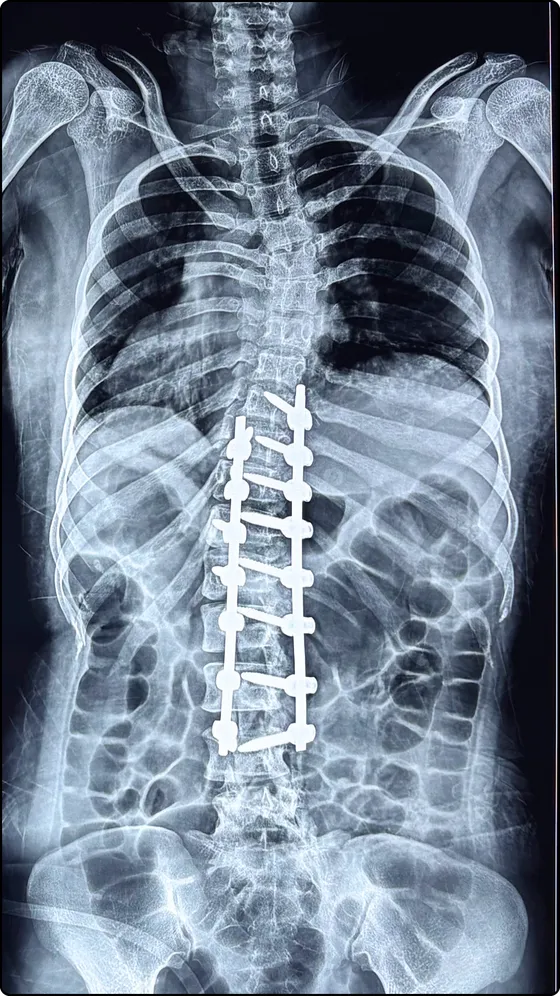
X-rays shared with patient consent.
What are the major types of spinal deformity?
- Scoliosis: an abnormal side-to-side curve of the spine, sometimes in an S-shape with more than one curve.
- Kyphosis: an excessive forward rounding of the upper back, seen as a hunch.
- Lordosis: an exaggerated inward curve of the lower back, often alongside kyphosis.
- Flatback syndrome: loss of the natural lower-back curve, making it hard to stand upright and walk.
- Ankylosing spondylitis: an inflammatory arthritis that can fuse vertebrae and lock posture.
- Spondylolisthesis: one vertebra slipping over another; severe slips need corrective surgery.
What causes spinal deformities?
- Congenital: present at birth, due to genetics or how the spine formed in the womb.
- Idiopathic: no known cause — the most common type of scoliosis.
- Paediatric: often appears around ages 10–12 during growth spurts.
- Neuromuscular: conditions such as cerebral palsy that change the muscle pull on the spine.
- Degenerative: disc wear, vertebral fractures and stiffening ligaments in older adults.
- Traumatic: injuries that displace or collapse vertebrae.
- Postural: poor posture during growth — often correctable with strengthening and posture training.
- Iatrogenic: deformity after an earlier spine surgery or a failed fusion.
How is spinal deformity treated?
Treatment depends on the type of curve, how fast it is progressing and the patient’s age. Non-surgical care is always tried first where it can work.
Observation — regular X-rays to track mild curves.
Bracing — to slow curve progression in growing children.
Physiotherapy — core strengthening and posture training.
Spinal fusion — straightening the spine and holding it with navigation-placed screws and rods.
Osteotomy — removing a wedge of bone to correct rigid, severe curves.
Growth-friendly systems — guiding the spine in young children without stopping growth.
Why patients choose Dr. Mahesh Kumar
deformity corrections for children and adults.
the most severe curve Dr. Kumar has corrected.
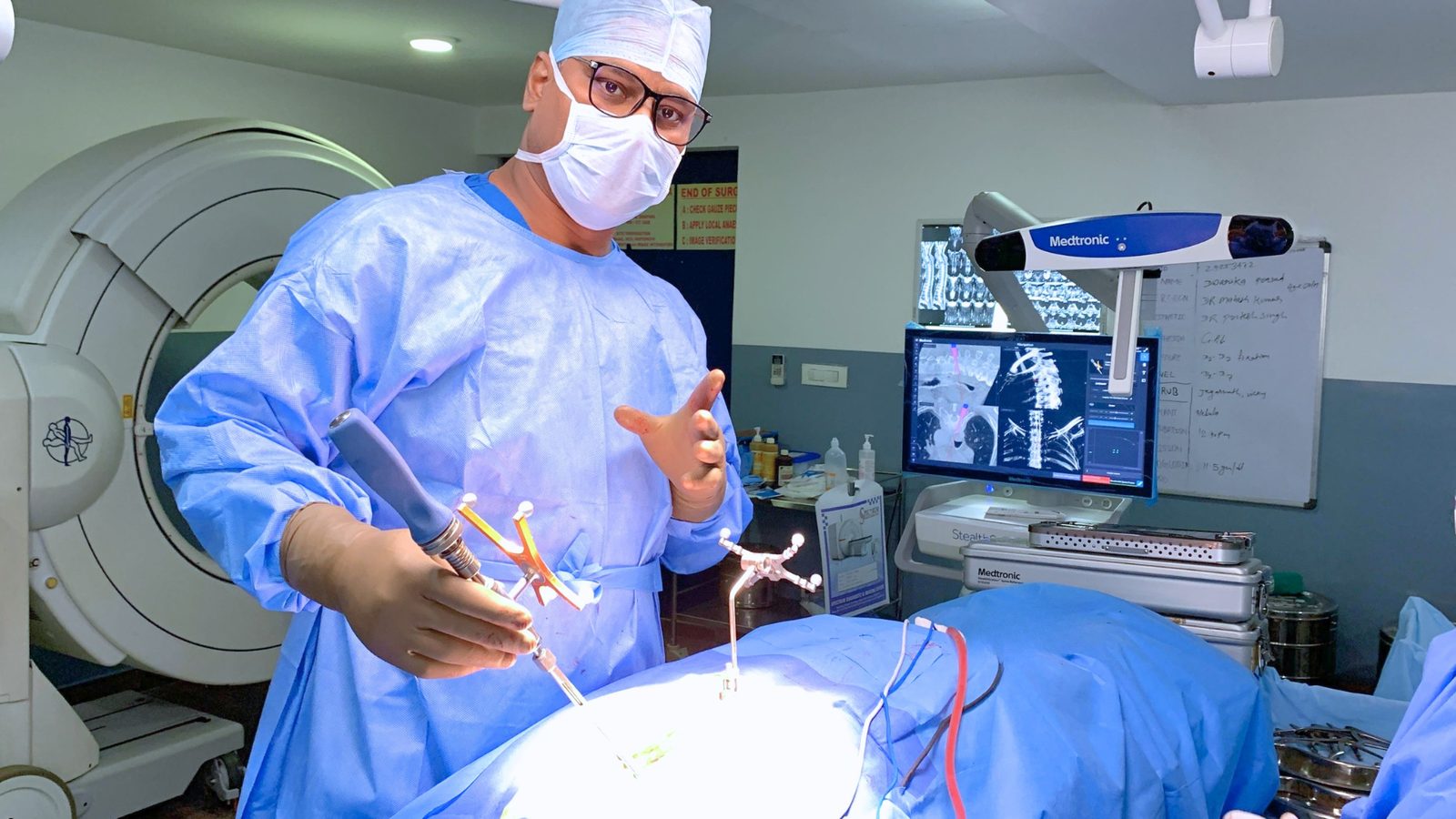
navigation-guided screw placement in every correction.
of spine surgery, including AIIMS and Sir Ganga Ram Hospital.
Watch Dr. Kumar explain
 4:49
Frequently asked questions
Is deformity correction surgery safe?
Every correction at CISRO is planned on 3D imaging and performed with O-Arm navigation, which improves screw accuracy and safety. Dr. Kumar explains the specific risks and benefits for your case at consultation.
What is the right age for scoliosis surgery?
There is no single age. In growing children, bracing may be tried first; surgery is considered when the curve keeps progressing. Adults with painful or progressive curves can also be treated.
Will I be able to bend and move normally afterwards?
Most patients return to daily activities, school or desk work after recovery. The fused section becomes stiff, but the rest of the spine keeps its movement.
Can I get an opinion before travelling to Patna?
Yes. Send your standing full-spine X-ray or MRI on WhatsApp at +91 70707 43222 for an initial review.